


Welding Equipment: Essential Solutions for Modern Manufacturing
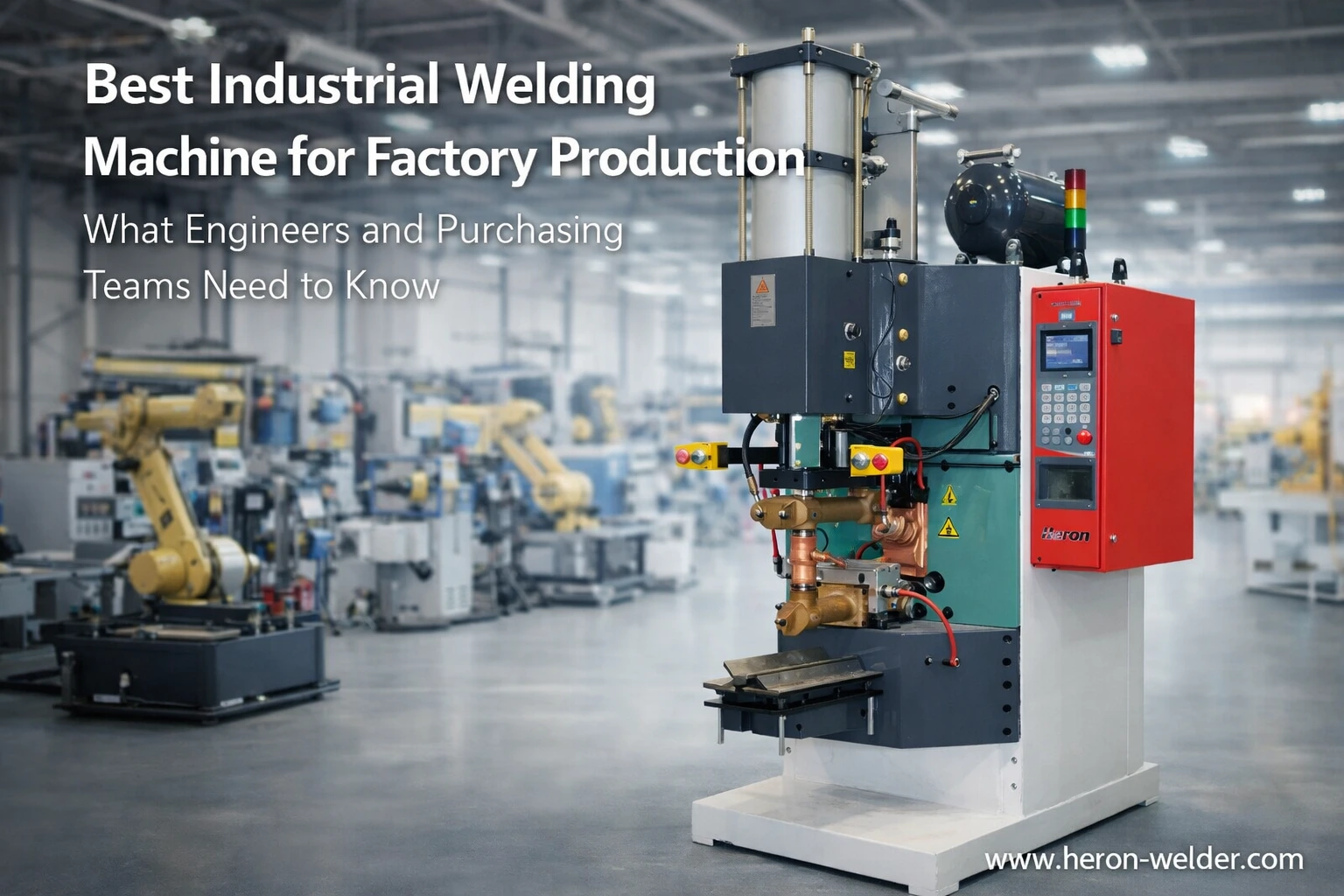
In today’s competitive industrial landscape, high-performance welding equipment is crucial for manufacturers seeking efficiency, precision, and reliability. From automotive assembly lines to aerospace fabrication, the right welding technologies not only improve product quality but also reduce production costs. Heron Welder, a global leader in industrial welding solutions, provides a full range of machines and systems designed for modern manufacturing needs.
Understanding Welding Equipment: Types and Principles
Welding equipment encompasses a variety of machines and tools used to join metals and thermoplastics through heat, pressure, or a combination of both. The most common industrial welding methods include:
1. Resistance Welding Machines
Resistance welding is widely used in automotive, appliance, and metal fabrication industries. It relies on the principle of electrical resistance to generate heat, fusing materials at the contact point. Key types include:
-
Spot Welding Machines: Ideal for joining sheet metals, commonly used in car body assembly.
-
Projection Welding Machines: Designed for parts with projections, ensuring precise and consistent welds.
-
Seam Welding Machines: Creates continuous, leak-proof welds for cylindrical or sheet applications.
-
MFDC and Capacitor Discharge Welders: Suitable for thin metals and precision assemblies, offering high repeatability and minimal thermal distortion.
2. Clinching and FSPR (Self-Pierce Riveting) Systems
Mechanical joining techniques such as clinching and self-pierce riveting (FSPR) provide strong, fast, and clean joints without the need for additional fasteners or welding fumes. These systems are widely used in automotive and lightweight metal applications where traditional welding may compromise material integrity.
3. Welding Guns and Controllers
Precision welding guns and intelligent controllers are the backbone of automated welding systems. They ensure consistent weld quality by monitoring current, pressure, and timing parameters in real-time, making them essential for high-volume production.
Applications of Welding Equipment in Industry
Welding equipment is critical across multiple sectors:
-
Automotive Manufacturing: Spot and projection welders are extensively used for chassis and body assembly. FSPR systems are ideal for joining aluminum panels without pre-drilling.
-
Electrical and Electronics Industry: MFDC and capacitor discharge machines allow precise welding of small components such as battery packs, connectors, and terminals.
-
Aerospace and Defense: Seam welding and precision resistance welders provide structural integrity for high-strength alloys used in critical components.
-
General Fabrication: From HVAC components to consumer appliances, welding equipment ensures robust and repeatable joins.
Heron’s range of equipment addresses these diverse applications, combining high productivity with quality assurance.
Comparing Welding Equipment Types: Which is Right for Your Factory?
Choosing the right welding equipment depends on materials, joint design, production volume, and automation requirements:
| Equipment Type | Best For | Advantages | Considerations |
|---|---|---|---|
| Spot Welding | Sheet metals, automotive bodies | Fast, high-volume, cost-effective | Limited to overlapping sheets |
| Projection Welding | Components with projections | Precise, reduces deformation | Requires accurate projection design |
| Seam Welding | Cylindrical or sheet assemblies | Leak-proof, continuous weld | Equipment cost higher than spot welding |
| FSPR Riveting | Aluminum panels, mixed materials | No pre-drilling, fast | Not suitable for extremely thick materials |
| MFDC Welding | Thin metals, electronics | High precision, low heat input | Requires trained operators |
Heron Welder provides expert guidance to help manufacturers select and integrate the right solution for their specific production line, ensuring both efficiency and quality.
Best Practices for Maximizing Welding Equipment Performance
Implementing high-quality welding equipment is just the first step. To fully leverage your investment, manufacturers should:
-
Regular Maintenance: Clean electrodes, check alignment, and inspect cables to prevent quality issues.
-
Process Monitoring: Use controllers to monitor weld current, pressure, and timing for consistent results.
-
Training Operators: Skilled personnel reduce defects and optimize machine usage.
-
Automation Integration: Combine welding equipment with robotic systems to improve throughput and reduce cycle time.
-
Material Testing: Validate weld strength and integrity with sample testing before full-scale production.
By following these practices, factories can extend machine lifespan, improve product quality, and reduce downtime.
Why Choose Heron Welding Equipment?
Heron Welder has decades of experience in delivering high-performance welding solutions to industrial manufacturers worldwide. Key advantages include:
-
Comprehensive range of resistance welding, clinching, and FSPR systems.
-
Advanced controllers and automation-ready solutions for Industry 4.0 integration.
-
Customizable machines and production lines tailored to client specifications.
-
Global support network for installation, maintenance, and training.
With Heron, manufacturers gain a partner committed to operational efficiency, product quality, and long-term reliability.
FAQs About Welding Equipment
1. What industries benefit most from resistance welding equipment?
Automotive, electronics, aerospace, and general metal fabrication industries rely heavily on resistance welding for high-speed, repeatable joints.
2. How does FSPR differ from traditional welding?
FSPR mechanically pierces and joins sheets without melting the metal, reducing thermal distortion and enabling lightweight aluminum assembly.
3. Can welding equipment be automated?
Yes. Heron’s machines can integrate with robotic arms, conveyors, and PLCs for fully automated production lines.
4. What maintenance is required for welding equipment?
Routine checks of electrodes, welding cables, and controllers, along with proper calibration, are essential for consistent performance.
5. How do I choose the right welding equipment for my application?
Factors include material type, thickness, joint design, and production volume. Heron offers consultation and system design support for optimal results.
Take Your Manufacturing to the Next Level
High-performance welding equipment is essential for modern factories striving for precision, productivity, and quality. Whether you need resistance welders, FSPR systems, or fully automated production lines, Heron Welder provides reliable, customized solutions tailored to your manufacturing challenges.
Request a quote or consult our experts today to optimize your welding processes and drive operational excellence.
